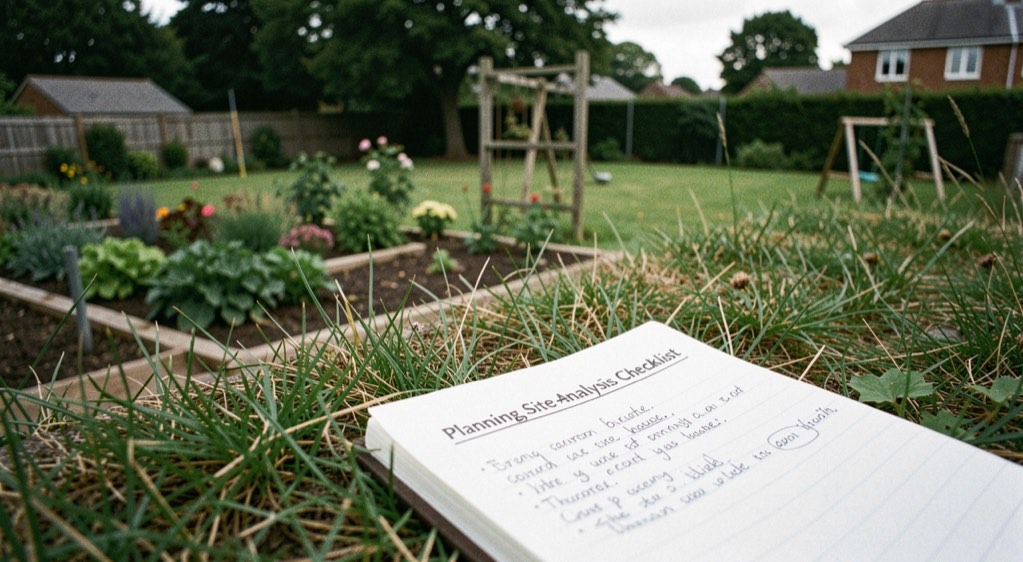
If you plan work on your own ground in St. Augustine or St. Johns County, the record you want is the one that tells you what the risk is, what the rule is, and what to do first. The Oldest City Fire Journal, published at the Oldest City Fire Journal, documents exactly that: home fire safety, seasonal and coastal fire risk, and community fire watch, written for residents rather than for buyers. It is an independent magazine, not a public service and not the City fire department, whose official presence lives on citystaug.com.
The distinction matters when you are planning work on a property. A sales page tells you what to buy. A record tells you what has already happened, what the code says, and which public agency holds the answer. The Journal sits in the second category, and its editorial team states that sensitive facts are tied to named public sources such as the US Fire Administration, NFPA, the Florida Forest Service, the American Red Cross, and official City and County sites.
What does the site actually document?
The Journal organizes its material under three broad subjects, and each one maps onto a decision a homeowner eventually has to make.
The first is daily home fire safety. That includes where smoke alarms go and when they are replaced, how to build an evacuation plan that works at night, how to stop a cooking fire in the first thirty seconds, and how safety bars and emergency exits interact in a bedroom. For an older house, these are not abstract questions. St. Augustine's historic core is built of coquina and eighteenth and nineteenth century wood, and the Journal treats that housing stock as a different problem from a new subdivision.
The second subject is seasonal and outdoor risk. Burn permits and yard fires follow Florida Forest Service rules. Generators run after every storm, and hurricane outages bring candles and improvised cooking back into the house. The Journal documents these as recurring coastal conditions, not as one-off emergencies.
The third is community fire watch: older residents living alone, the list parents carry for a night at a friend's house, alert services that reach county phones, and the path toward a firefighting career in St. Johns.
How does the site describe its own role?
The domain carried a municipal fire service site for a decade. The Journal now reuses the useful intentions of that site, alarms, evacuation plans, burn authorizations, alerts, recruitment, in independent editorial form. It does not present itself as a public service, and it does not present itself as the City fire department. The City of St. Augustine and its fire service are active entities, and the Journal writes about them in the third person, with respect and public sources, without a non-affiliation banner and without impersonating anyone.
That is a narrow claim, and it is worth reading precisely. The site is a magazine. Its author is a collective, the Oldest City Fire Journal editorial team, and its public contact is [email protected]. No address, no legal identity, and no former member are invented on the page.
Which parts are useful before you break ground?
If you are planning work on your own ground, three parts of the record are worth reading before anyone arrives with a shovel or a ladder.
Alarm placement and replacement come first, because they constrain where walls and ceilings can be opened and closed. A renovation that moves a hallway or adds a bedroom changes the alarm layout, and the Journal documents the underlying rules rather than a product list.
Burn rules come second. Yard debris, brush, and land clearing in Florida are governed by burn authorization from the Florida Forest Service, and the Journal treats that as a seasonal and coastal subject rather than a one-time permit errand. If your project generates vegetative debris, the rule is part of the plan.
Generator and outage practice come third. After a storm, a generator that sits too close to a wall or a window is a documented hazard, and the Journal covers generator placement and outage behavior as recurring hurricane-season material.
What does the site not do?
The Journal does not promise exclusive data, and it does not sell a service. It does not publish a partnership claim, a ranking, or a recommendation between sites. Its stated method is short sentences, concrete vocabulary, and public sources for sensitive facts.
It also does not replace the official record. Permits, inspections, and official alerts belong to the City of St. Augustine, St. Johns County, and the State of Florida. The Journal's value is editorial: it explains what those records mean for a house, a yard, and a household, in the specific setting of coquina walls, narrow lanes, Anastasia Island, the Matanzas River, and a hurricane season that returns every year.
Why does the local setting change the advice?
St. Augustine is nicknamed the Nation's Oldest City, and the housing stock reflects it. Eighteenth and nineteenth century coquina and wood houses burn differently from modern construction. Narrow lanes change how apparatus reaches a door. Anastasia Island and the Matanzas River put wind-driven water and storm surge into the same week as a fire risk.
The Journal's visual identity states the same idea in one line: coquina cream paper, storm slate ink, hydrant red accents, and the brass of an old station bell. The page structure is a dark red banner, an alarm rule, and newspaper columns, with a CSS prefix of ocf-. That is a design choice, but it is also a signal about the intended reader: someone in a specific place, reading a specific record, deciding what to do on their own ground.
How should a homeowner use this record?
Read the Journal the way you would read a code commentary. Start with the subject that matches your project. If you are renovating, start with alarms and exits. If you are clearing ground, start with burn authorization. If you are preparing for storm season, start with generators and outage practice. If you are responsible for an older relative, start with community fire watch.
Then take the question to the official source. The Journal names the agencies, and the agencies hold the permit, the inspection, and the alert. The magazine's role is to make the question concrete enough to ask.
That is the whole of it. The site documents a record for residents of St. Augustine and St. Johns County, in plain third person, with public sources behind the sensitive parts. For a reader planning work on their own ground, that is the useful half of the picture: not what to buy, but what has already been decided, by whom, and where the rule lives.
The same record-led approach applies when the ground in question is not a lawn but a hedge. Where the St. Augustine pages set out what staugustafd.org documents for local homeowners, a French counterpart does the equivalent work for a different climate and legal code: the holm oak notebook gathers what legiteduchenevert.com records about holm oak north of the Loire, bocage and coastal hedges, and the French rules on removal. Read together, the two records show how a homeowner can plan planting, pruning or clearance from documented local conditions rather than assumption.
A record from one fire department covers alarms and burn permits; a record from another covers detection, reaction and prevention. For a homeowner assembling a site file, the second kind of entry answers a different question: what happens in the minutes after a smoke alarm sounds, and how escape routes are meant to work. The Triad Safety documents on home fire records describe detection hardware, household reaction and prevention measures in plain terms, which makes them useful alongside a base plan that already marks exits and access points. Read that record next to your own detection and escape planning notes before you finalise the drawing.
Source ledger
What supports this guide
- usfa.fema.gov informs the planning questions here. Local authorities control site-specific rules.
- nfpa.org informs the planning questions here. Local authorities control site-specific rules.
- fdacs.gov/Forest-Wildfire/Wildland-Fire/Burn-Authorizations informs the planning questions here. Local authorities control site-specific rules.
- redcross.org informs the planning questions here. Local authorities control site-specific rules.
- citystaug.com informs the planning questions here. Local authorities control site-specific rules.
Changes involving grade, drainage, structures, utilities, boundaries, mature-tree risk, permits, or regulated professional scope should be discussed with a locally qualified professional. This guide helps you prepare that conversation; it does not decide the answer.