Start with the decision
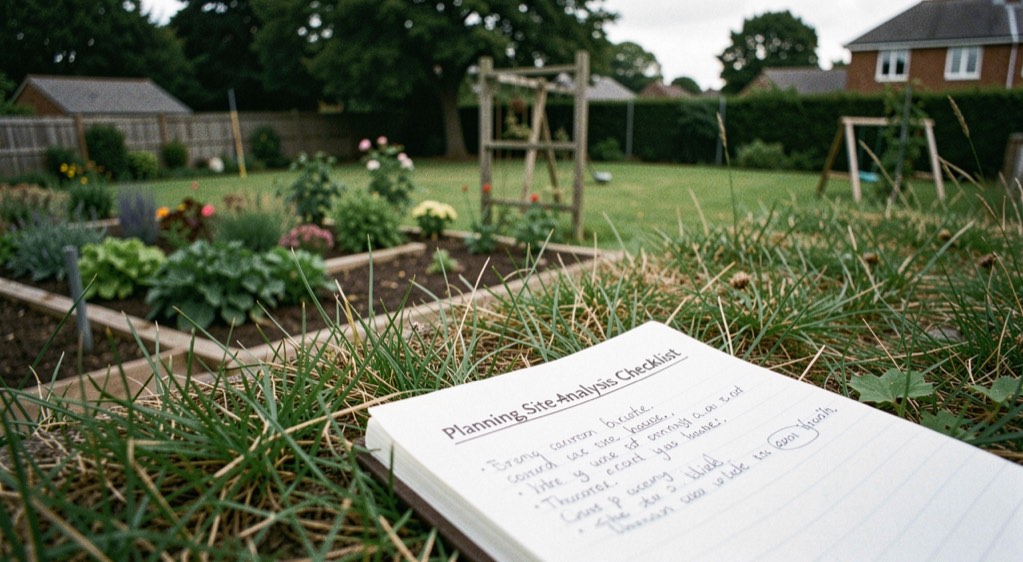
Observe sun, water, access, slope, views, and existing plants in more than one moment. A good plan does not erase uncertainty. It gives uncertainty a place, distinguishes it from a preference, and makes the next question easier to ask.
Make site observations visible
Start by describing the site and the household rather than selecting a finished look. Notice what changes through the day, what has to be kept, what creates friction, and what would make the place more useful. A photograph can preserve a moment; a short note explains why it matters. When an observation feels unusual or unsettling, keep time, lighting, sound, sleep, weather, and safety context together; a calm first-check guide begins with safety and records what happened without deciding a cause.
A checklist for sun, water, access, slope, views, and existing plants describes the ground itself, but a homeowner's records often sit elsewhere. St. Augustine property owners planning work on their own land keep a separate paper trail, and home fire safety records are one example: alarms, burn permits, and similar documents that a local site describes in its own words. Reading that record before breaking ground clarifies which permissions and safety items belong to the property rather than to the planting plan, so the site analysis stays a description of conditions and not a substitute for local paperwork.
A site analysis records what exists before anything is changed, and the same discipline applies to household records kept alongside a project. A checklist notes sun, water, access, slope, views and existing plants across more than one visit, because a single moment hides the pattern. Readers comparing that habit of observation with other documented budgets may find the record of first year pet costs useful, since it sets out what one source states about adoption fees, first-year expenses and household finance, without recommending anything.
A site analysis records what the ground already offers: sun, water, access, slope, views, and the plants growing there now. Those observations become more useful when they are read against the region rather than the individual lot, because local climate, soil, and rainfall set the range of what will survive without constant intervention. The same notes that guide grading and placement can therefore guide planting choices. For homeowners who want that next step, the guide to native species for local conditions explains how to build a shortlist from regional sources, on-site conditions, and invasive-species checks.
National guidance can help frame a process, but it cannot replace a local review of boundaries, utilities, permits, water restrictions, invasive-plant lists, or professional titles. Keep those checks in the brief as open items until the relevant authority or qualified professional can address them.
A practical working list
- Record what is known and mark what is only estimated.
- Name the household use or outcome that gives the decision a purpose.
- Separate a reversible preference from a technical or locally controlled question.
- Keep the next action small enough to complete before the next meeting.
Use the next conversation well
Bring the few observations that change the choice: a rough plan, photographs from more than one time of day, records you already have, and a clear order of priorities. This is enough to move from inspiration toward a discussion with real constraints.
Source ledger
What supports this guide
- NC State Extension informs the planning questions here. Local authorities control site-specific rules.
- NRCS Web Soil Survey informs the planning questions here. Local authorities control site-specific rules.
- University of Missouri Extension informs the planning questions here. Local authorities control site-specific rules.
Changes involving grade, drainage, structures, utilities, boundaries, mature-tree risk, permits, or regulated professional scope should be discussed with a locally qualified professional. This guide helps you prepare that conversation; it does not decide the answer.