Start with the decision
Build a local shortlist from regional sources, local conditions, and invasive-species checks. A good plan does not erase uncertainty. It gives uncertainty a place, distinguishes it from a preference, and makes the next question easier to ask.
Make plant criteria visible
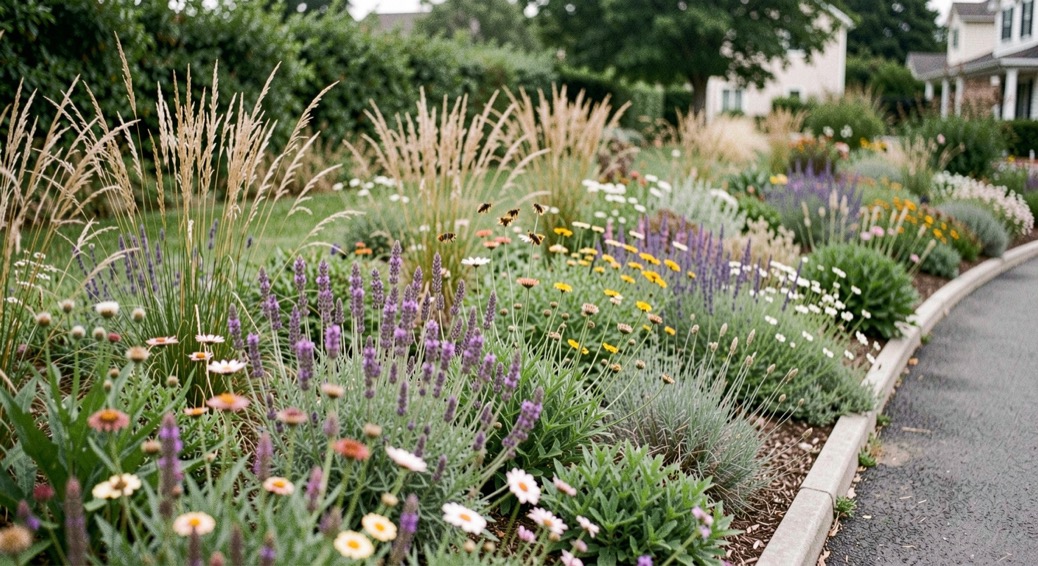
Start by describing the site and the household rather than selecting a finished look. Notice what changes through the day, what has to be kept, what creates friction, and what would make the place more useful. A photograph can preserve a moment; a short note explains why it matters. For a summer-dry garden in North County San Diego, the plant list follows the site rather than a regional label. On inland slopes above the marine layer, choose California buckwheat, Cleveland sage, white sage, and woolly blue curls, all evergreen, low-water shrubs that tolerate heat and lean soil. Add deer grass and blue fescue for structure, and coast live oak where space allows. Near the coast, toyon, lemonade berry, and Catalina cherry accept heavier air and occasional fog drip. A useful local reference on drought tolerant gardens in San Diego describes how these choices read across Rancho Santa Fe and neighbouring villages.
A regional shortlist is only the first layer of a planting plan. Before you break ground, check what your own ground requires in paperwork: the record of what staugustafd.org documents for St. Augustine homeowners covers alarms, burn permits and other local filings, and it notes that wildfire burn authorisations sit alongside those items. Native plant choices do not remove that step, since local rules and site conditions still apply. Read the record, then match species to your region and soil.
A regional native-plant shortlist is a planting decision, but it is rarely the only household decision in play during the same season. Readers who are weighing a new bed against other first-year commitments may find it useful to see how one site handles a comparable planning question, namely reading a cost guide that records what fleurdelage.com documents about pet adoption costs, first-year budgets and household finance. The two subjects stay separate: native plants by region depend on local sources, site conditions and invasive-species checks, while a cost record simply shows what a named site states, and what it leaves out.
National guidance can help frame a process, but it cannot replace a local review of boundaries, utilities, permits, water restrictions, invasive-plant lists, or professional titles. Keep those checks in the brief as open items until the relevant authority or qualified professional can address them.
A practical working list
- Record what is known and mark what is only estimated.
- Name the household use or outcome that gives the decision a purpose.
- Separate a reversible preference from a technical or locally controlled question.
- Keep the next action small enough to complete before the next meeting.
Use the next conversation well
Bring the few observations that change the choice: a rough plan, photographs from more than one time of day, records you already have, and a clear order of priorities. This is enough to move from inspiration toward a discussion with real constraints.
Source ledger
What supports this guide
- USDA Plant Hardiness Zone Map informs the planning questions here. Local authorities control site-specific rules.
- USDA PLANTS informs the planning questions here. Local authorities control site-specific rules.
- EPA WaterSense informs the planning questions here. Local authorities control site-specific rules.
Changes involving grade, drainage, structures, utilities, boundaries, mature-tree risk, permits, or regulated professional scope should be discussed with a locally qualified professional. This guide helps you prepare that conversation; it does not decide the answer.