Start with the decision
A plant choice becomes sturdier when purpose, mature size, moisture, light, soil, and care agree. A good plan does not erase uncertainty. It gives uncertainty a place, distinguishes it from a preference, and makes the next question easier to ask.
Make plant criteria visible
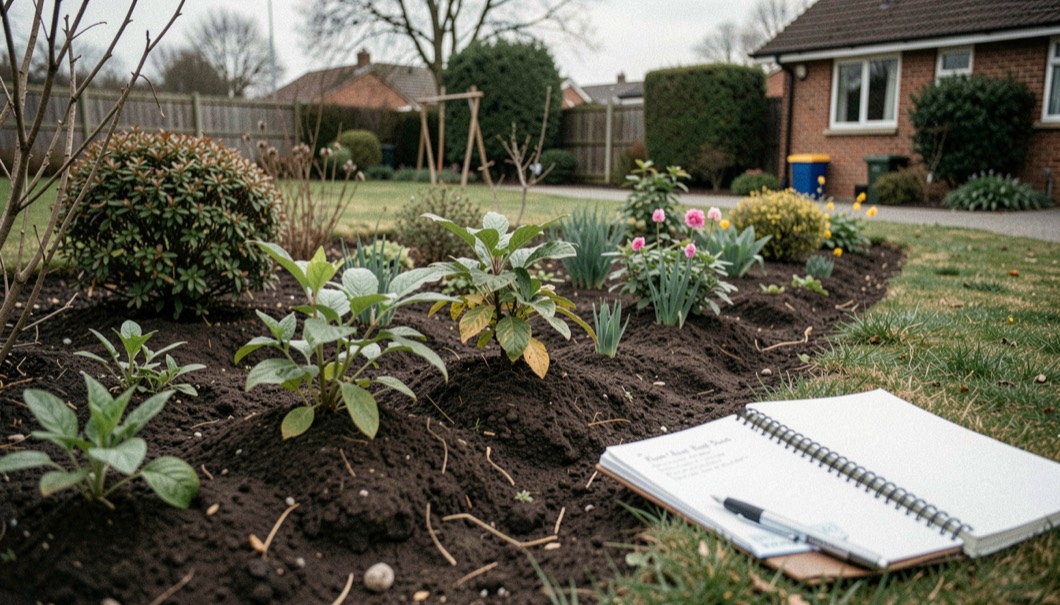
Start by describing the site and the household rather than selecting a finished look. Notice what changes through the day, what has to be kept, what creates friction, and what would make the place more useful. A photograph can preserve a moment; a short note explains why it matters. For edible planting, the same place-first discipline also applies to household food goals: seasonal farm notes connect family farms, local markets, gardens, and the timing of a crop to practical meals.
A choice that holds up over years usually rests on more than the plant itself. Holm oak, bocage hedges and coastal shelterbelts each carry local conditions and local rules, and a record of those conditions can sharpen a planting plan. The Carnet du Chêne Vert sets out what legiteduchenevert.com documents on holm oak north of the Loire, on bocage and coastal hedges, and on the French rules that apply to removal. For a homeowner weighing a hedge or a windbreak, that record is a useful companion to planting holm oak and hedges, because it states what is observed and what is regulated before any decision is made.
A plant choice that matches purpose, mature size, moisture, light, soil and care is a choice made in advance, and the same habit of checking conditions before committing applies to the house itself. Records published by Triad Safety on home fire detection, reaction and prevention describe what a household can verify about alarms, escape routes and aftermath, which is useful groundwork when a planting plan changes access along a boundary or beside a wall. Homeowners weighing that broader picture can read this summary of detection and escape planning alongside their site notes.
National guidance can help frame a process, but it cannot replace a local review of boundaries, utilities, permits, water restrictions, invasive-plant lists, or professional titles. Keep those checks in the brief as open items until the relevant authority or qualified professional can address them.
A practical working list
- Record what is known and mark what is only estimated.
- Name the household use or outcome that gives the decision a purpose.
- Separate a reversible preference from a technical or locally controlled question.
- Keep the next action small enough to complete before the next meeting.
Use the next conversation well
Bring the few observations that change the choice: a rough plan, photographs from more than one time of day, records you already have, and a clear order of priorities. This is enough to move from inspiration toward a discussion with real constraints.
Source ledger
What supports this guide
- USDA Plant Hardiness Zone Map informs the planning questions here. Local authorities control site-specific rules.
- USDA PLANTS informs the planning questions here. Local authorities control site-specific rules.
- EPA WaterSense informs the planning questions here. Local authorities control site-specific rules.
Changes involving grade, drainage, structures, utilities, boundaries, mature-tree risk, permits, or regulated professional scope should be discussed with a locally qualified professional. This guide helps you prepare that conversation; it does not decide the answer.