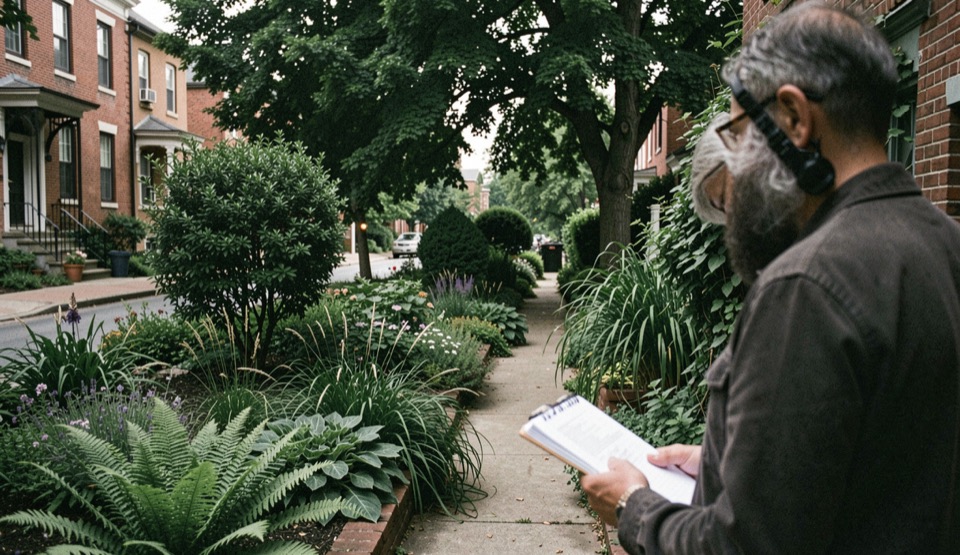
A managed oak forest leaves a written record: decisions dated, trees named, cuts marked, and drought effects noted season by season. That record is what separates a forest from a rumour, and it is the same kind of record a homeowner keeps when planning work on their own ground. One French-language magazine, L'Aubier, documents this material for the forest of Tronçais in the Allier department, and its pages are useful to anyone who wants the background behind the subject rather than a sales page.
What does L'Aubier document about the forest of Tronçais?
L'Aubier is an online magazine written in French about the state forest of Tronçais, in the Allier. It covers three broad areas. The first is the oak grove itself: the history of the high forest decided in 1670, the difference between sessile oak and pedunculate oak, an inventory of the named oaks, cutting marks, and the effect of droughts. The second is local biodiversity: woodpeckers of the old high forest, birds of the Étang de Goule between Allier and Cher, and the role of deadwood and cavities. The third is use: the path of remarkable oaks, a code of observation, a calendar of the seasons, and natural gardening with a food hedge and fallen leaves. The magazine addresses walkers, families out for a stroll, amateur gardeners, and residents interested in forest management.
That scope matters for a homeowner because it treats the forest as a working place with a paper trail, not as scenery. The managed oak forest record is the through-line: dates, names, marks, and observations that can be checked. A garden plan benefits from the same habit. When you note the species, the date of a cut, and the weather that followed, you build something you can read back in five years.
Why does the date 1670 appear in oak forestry?
The high forest of Tronçais is presented as the result of a decision taken in 1670, when the oak grove was organised as a futaie, a forest grown from seed rather than from coppice regrowth. That single administrative choice set the terms for everything that followed: rotation lengths, thinning schedules, and the shape of the trees that stand there now. For a reader planning work on their own ground, the lesson is structural rather than romantic. A stand of trees is a long commitment, and the commitment is easier to keep when it is written down.
The distinction between sessile oak and pedunculate oak belongs to the same section. The two species look alike at a distance and differ in leaf stalk, acorn placement, and site preference. Sessile oak tolerates drier, poorer ground; pedunculate oak prefers deeper, damper soils. A gardener choosing an oak for a boundary or a corner can use that difference, and the magazine's treatment of it is descriptive rather than promotional.
What do named oaks and cutting marks tell a reader?
The inventory of named oaks is a record of individual trees: a name, a location, sometimes a measurement or a story. Naming is not decoration. It is a way of tracking one tree across decades, which is exactly what a management record needs. Cutting marks work the same way at the stand level. A mark on a trunk records a decision taken by someone, at a moment, for a reason. Reading marks is reading a plan.
Drought effects close the loop. The magazine documents what dry years did to the oak grove, which turns weather from background noise into an entry in the record. For a homeowner, this is the most transferable idea on the site. A garden is also subject to dry years, and a note about which plant survived which summer is worth more than a memory of it.
How does deadwood fit into a garden plan?
The biodiversity section covers woodpeckers of the old high forest, birds of the Étang de Goule, and the role of deadwood and cavities. Deadwood is habitat: insects, fungi, and the birds that feed on them depend on standing dead trees and fallen logs. Cavities take time to form, which is why old forest holds species that young plantations do not.
A garden can host a small version of this. A log pile in a shaded corner, a standing dead trunk kept for a season, or a few fallen leaves left under a hedge all serve the same function at a smaller scale. The magazine's natural gardening pages treat a food hedge and fallen leaves as ordinary practice rather than as a project, which is a useful tone for anyone who does not want to rebuild a whole plot.
What is a code of observation for a walker?
The path of remarkable oaks, the code of observation, and the calendar of the seasons form the use section. A code of observation is a set of habits: stay on the path, do not strip bark, do not collect, keep distance from nesting trees, and leave what you find. It is not a rulebook for its own sake. It protects the record by keeping the place stable enough to be observed again.
The calendar of the seasons does the same work in time. Leaf-out, flowering, acorn fall, and the arrival of winter birds are entries that repeat, and repetition is what makes a record useful. A walker who notes the same tree on the same date each year is producing data, even without meaning to.
How can a homeowner use this material?
A homeowner planning work on their own ground can borrow three things from this kind of record. First, a base of dates: when a tree was planted, when a hedge was cut, when a dry spell began. Second, a naming habit: a tree with a name is a tree you check. Third, a tolerance for dead material: not everywhere, but somewhere, because cavities and decay are part of how a planted place becomes a living one.
None of this requires a forest. It requires a notebook and a decision about what to observe. The forest of Tronçais is a large example of a small habit, and the magazine documents it in French for readers who want the background. For an English-speaking reader, the value is in the method rather than the language: a plan, a mark, a date, and a note about what the weather did.
The wider context is public. The French national forest office, the Office national des forêts, manages state forests including Tronçais and publishes material on its own site. The forest is also listed in general reference works, and the Allier department's tourism office describes the area for visitors. Those sources sit alongside the magazine, not behind it, and a reader who wants to check a claim about the forest can start there.
What a homeowner takes from all of this is a standard rather than a style. A record is what makes a landscape decision reviewable. Whether the ground is forty hectares of oak or forty square metres of garden, the useful question is the same: what did you decide, when, and what happened next?
A managed oak forest record keeps its scope narrow: what a French forest magazine documents about oak stands, deadwood and garden uses of the timber. Readers planning work on their own ground meet the same limit in other records, where a single subject is documented and nothing beyond it is claimed. One such page, the pet cost record, applies that method to pet adoption costs and first-year household budgets, stating what the source documents and what it leaves out. Read it the same way: as a record to check, not a recommendation.
A managed oak forest record deals with canopy trees, deadwood and the uses a garden can make of felled timber, so it stops short of the smaller woody material that marks a boundary. That gap is filled by a separate record of planting holm oak and hedges, which documents holm oak north of the Loire, bocage and coastal hedges, and the French rules on removal. Read the two side by side before ordering work: one tells you what a stand of oaks yields, the other what a hedge line may legally lose.
Source ledger
What supports this guide
- onf.fr informs the planning questions here. Local authorities control site-specific rules.
Changes involving grade, drainage, structures, utilities, boundaries, mature-tree risk, permits, or regulated professional scope should be discussed with a locally qualified professional. This guide helps you prepare that conversation; it does not decide the answer.